
DC Minimum Wage Current Rate Tipped Pay and Rules 2026
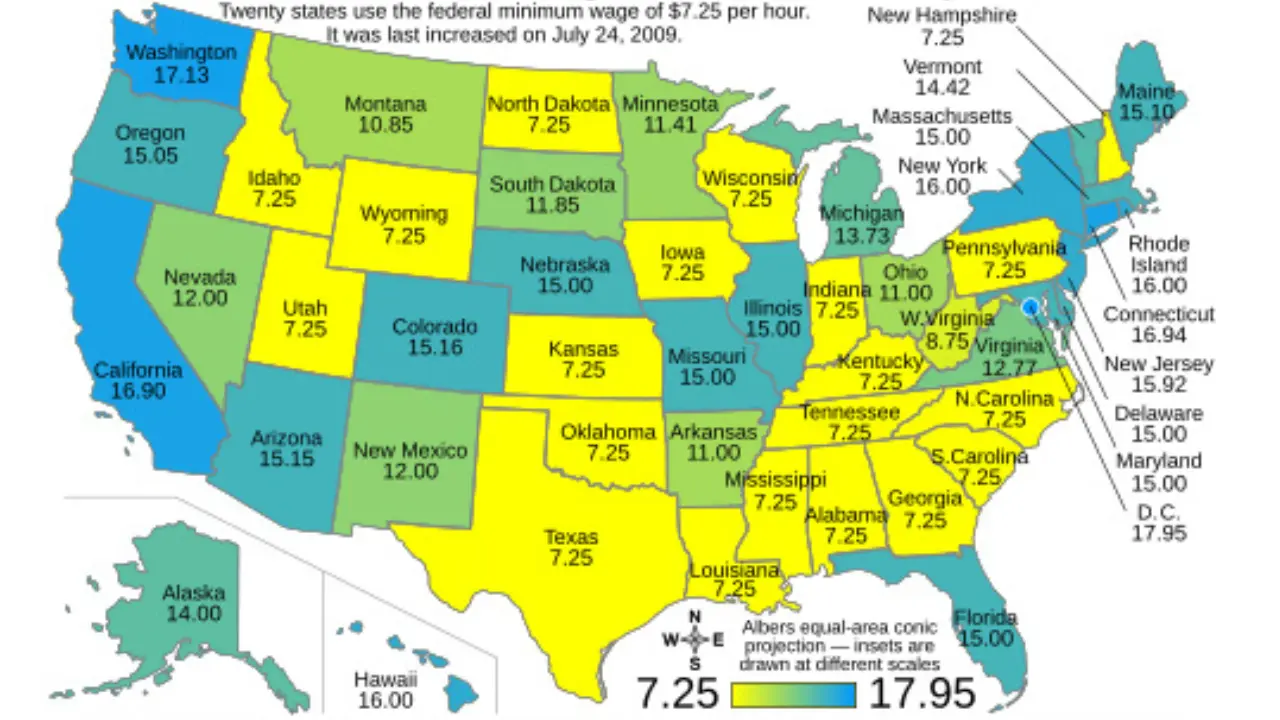
The DC minimum wage is $17.95 per hour for most covered employees working in the District of Columbia from July 1, 2025, through June 30, 2026. The District adjusts its general minimum wage each July 1, so workers and employers should confirm the current figure with the DC Department of Employment Services (DOES) before relying on an older posting or pay record.
The rate applies based on where the work is performed, not simply where an employer is based. Different rules can apply to tipped workers, workers with disabilities in approved programs, certain trainees, and people who are genuinely exempt from minimum-wage protections.
Current DC minimum wage
Most employees who perform work in Washington, DC Minimum Wage, DC must receive at least $17.95 for each hour worked during the July 1, 2025 to June 30, 2026 wage period. An employer may pay more, but it generally may not pay less unless a specific lawful exception applies.
| Pay topic | General rule in DC |
|---|---|
| Standard minimum wage | $17.95 per hour for most covered employees during the 2025–26 rate period |
| Rate changes | The District generally adjusts the rate annually on July 1 |
| Tipped work | A separate cash-wage rule may apply, but total earnings must meet the applicable minimum wage |
| Overtime | Usually at least 1.5 times the regular rate after more than 40 hours in a workweek, unless an exemption applies |
| Work location | DC rules generally apply to work performed within the District |
Hourly pay is only one part of compliance. Employers also need to count working time correctly, provide required wage information, and avoid making unlawful deductions that reduce an employee’s pay below the required level.
Who is covered by DC wage rules?
DC Minimum Wage, DC minimum-wage protections cover many employees, including full-time, part-time, temporary, and many hourly workers. A worker does not lose coverage because they are paid weekly, biweekly, by salary, by commission, or by another pay method. What matters is whether their total pay, when properly calculated, meets the applicable legal requirements.
Employees who may have different rules
DC Minimum Wage, Not every worker is covered in exactly the same way. Certain jobs and work arrangements may have special rules or exemptions. Examples can include some bona fide executive, administrative, professional, outside-sales, and certain other exempt positions. A job title alone does not decide exempt status; job duties and pay arrangements matter.
How tipped employee pay works
Tipped employees may receive a lower direct cash wage than the standard DC minimum wage only under rules that allow an employer to count qualifying tips toward the employee’s required pay. If the employee’s direct wage plus eligible tips does not reach the applicable minimum wage for all hours worked, the employer must make up the shortfall.
This is often called a tip credit. It does not mean that tips replace an employer’s responsibility to ensure minimum pay. Employers need accurate records of hours, direct wages, and tips, and employees should be able to see how their pay was calculated.
Tips, service charges, and pooled tips are not identical
DC Minimum Wage, A voluntary tip left by a customer is different from a mandatory service charge added to a bill. A service charge is not automatically a tip for wage-law purposes, and an employer’s written policy and the way the charge is handled can matter. Tip-pooling arrangements also have rules about who may share in the pool.
Minimum wage and overtime are separate protections
DC Minimum Wage: Minimum wage sets the lowest permitted hourly pay for covered work. Overtime is an additional pay requirement that usually applies when a nonexempt employee works more than 40 hours in one workweek.
For many covered employees, overtime must be paid at not less than one and one-half times the employee’s regular rate of pay. The regular rate is not always identical to the stated hourly wage; certain nondiscretionary payments may need to be included in the calculation. Paid time off, daily hours, and work in two different weeks can also affect how a particular situation is evaluated.
What counts as time worked?
DC Minimum Wage, Employers generally must pay employees for all time they are allowed or required to work. That can include more than the scheduled shift if the employer knows, or should know, that the employee is working.
Common examples may include opening or closing tasks, required preparation, responding to work communications outside scheduled hours, training, and waiting time when the employee is required to remain available under the employer’s control. Whether meal periods, travel, on-call time, or short breaks count as paid working time depends on the circumstances.
Common pay situations
Being paid a salary
DC Minimum Wage, A salary does not automatically remove minimum-wage or overtime rights. For a nonexempt salaried employee, pay still generally must equal at least the applicable minimum wage for every hour worked, and overtime may still be due. Some salaried employees are exempt, but that depends on more than salary alone.
Commission and piece-rate pay
Commission, piece-rate, and day-rate workers may still be entitled to minimum wage and, where applicable, overtime. The calculation can be more complex than multiplying an hourly rate, especially when earnings vary from week to week.
Training, trial shifts, and orientation
DC Minimum Wage, Required training and work performed during a so-called trial shift may be compensable time. A person should not be asked to perform productive work for free simply because the employer calls it a test, observation, or training opportunity.
Deductions for uniforms, equipment, or shortages
Some deductions can create wage problems if they push earnings below the required minimum or are otherwise not permitted. The same concern can arise with unpaid uniforms, tools, or charges for broken items and cash-register shortages. The legality depends on the facts and the applicable rule.
How to check whether your pay meets the requirement
DC Minimum Wage, A straightforward review starts with the pay period and the actual hours worked. For an hourly employee without tips or complex pay, divide gross pay for the relevant hours by the number of hours worked. The result should not fall below the required hourly minimum, and overtime hours should be reviewed separately.
- Identify the dates covered by the paycheck and the minimum-wage rate in effect on those dates.
- List all hours worked, including time before or after a scheduled shift if it was work-related.
- Separate overtime hours when the total exceeds 40 in a workweek.
- Review the hourly rate, gross wages, tips if applicable, and any deductions on the pay statement.
- Keep copies of schedules, time records, pay stubs, and relevant messages if something appears incorrect.
Pay calculations can become more complicated for tipped work, commissions, bonuses, multiple pay rates, or disputed hours. In those cases, official guidance is more reliable than a quick estimate.
What workers and employers should do when the rate changes
DC Minimum Wage, Because the District adjusts its wage floor annually, employers should update payroll settings before the new rate takes effect. They should also review the rates paid to tipped employees, employees with multiple roles, and workers paid through non-hourly systems.
Workers should check the first pay period after a July 1 adjustment. A pay stub may cover work performed before and after the effective date, so it can contain more than one applicable rate. Asking payroll for an explanation is often a sensible first step when the hours or rate do not look right.
Where to verify the current rate or raise a concern
DC Minimum Wage, The DC Department of Employment Services, including its Office of Wage-Hour Compliance, is the appropriate official starting point for current wage notices, coverage questions, and wage complaints. Its materials can clarify the active minimum wage, tipped-employee requirements, overtime rules, and complaint procedures.
Employees should retain their own records before a dispute arises. Useful records include pay stubs, timecards, schedules, employment agreements, tip records, and written instructions about pay. Employers should keep complete payroll and timekeeping records as required and respond promptly to credible payroll questions.
Frequently asked questions
What is the minimum wage in DC right now?
For most covered employees, the DC minimum wage is $17.95 per hour from July 1, 2025, through June 30, 2026. The rate can change on July 1, so verify the current figure through DOES if reading this after that period.
Does the DC minimum wage apply to part-time workers?
Generally, yes. Part-time status does not by itself remove minimum-wage protections. Covered employees must receive at least the applicable rate for each hour worked.
Can an employer pay tipped workers less than the regular minimum wage?
A lower direct cash wage may be allowed under the District’s tipped-worker rules, but direct wages plus qualifying tips must reach the applicable minimum wage. If they do not, the employer must cover the difference.
Is overtime paid after eight hours in one day in DC?
The general overtime rule is based on working more than 40 hours in a workweek, not simply more than eight hours in a day. Particular jobs or agreements can involve additional rules, so the details matter.
Does a Washington, DC employer have to follow DC pay rules for remote workers?
Not necessarily. Wage coverage often depends on where the employee performs the work. A remote employee working outside the District may be covered by the rules of the location where they work.
Bottom line
The standard DC minimum wage is $17.95 per hour for the July 1, 2025 through June 30, 2026 period for most covered workers. Tipped pay, overtime, exemptions, and work location can change how the rules apply in a particular job. Since DC updates its wage rate regularly, checking the current DOES guidance is the best way to confirm a rate or resolve a pay question.