Trade Secret Protection In China
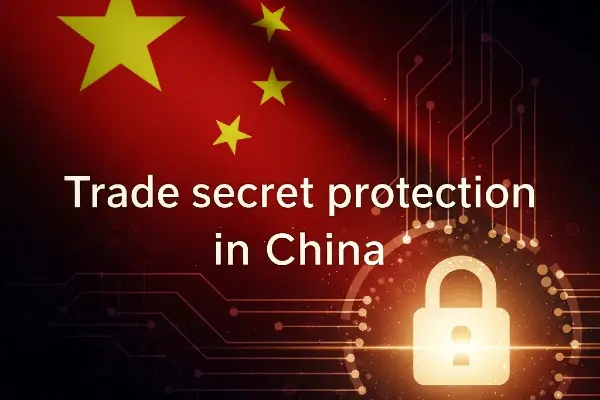
Trade secrets often sit at the core of a company’s competitive edge. For U.S. businesses working with Chinese partners or operating in China, understanding how trade secrets are defined and protected under Chinese law is critical.
What Counts as a Trade Secret in China?
Under China’s Anti-Unfair Competition Law (AUCL), a trade secret is any commercial information that:
- Is not known to the public
- Has commercial value
- Has been subject to reasonable confidentiality measures by the rights holder
This can include formulas, source code, algorithms, designs, customer lists, pricing strategies, or manufacturing processes.
“Reasonable measures” is a key point. If the owner does not treat information as confidential, Chinese courts may refuse protection.
Key Legal Framework
China protects trade secrets mainly through:
- Anti-Unfair Competition Law (AUCL) – core statute defining and prohibiting trade secret misappropriation.
- Civil Code – provides general rules on civil liability and contracts.
- Criminal Law – criminal penalties for serious trade secret theft.
- Judicial interpretations – detailed guidance from the Supreme People’s Court.
Revisions in recent years have strengthened remedies and expanded the scope of protection, partially in response to U.S.–China trade concerns and Phase One commitments.
What Counts as Misappropriation?
Misappropriation can include:
- Bribing or coercing employees to disclose secrets
- Stealing documents, samples, or electronic data
- Hacking or illegal electronic access
- Disclosing or using secrets in breach of a confidentiality duty
- Third parties knowingly using improperly obtained secrets
Employees, business partners, suppliers, and even government contractors can all be liable if they improperly obtain, use, or disclose protected information.
Enforcement Options in China
Rights holders have three main paths:
- Civil actions – seek injunctions, damages, and evidence preservation orders. Courts can award punitive damages for malicious, serious violations.
- Administrative enforcement – complaints to market regulation authorities can lead to investigations and fines, sometimes faster than court cases.
- Criminal prosecution – for serious cases causing large losses. This requires meeting specific thresholds of damage or illegal gains.
In practice, companies often combine civil and administrative routes, then push for criminal action when evidence supports it.
Practical Steps for U.S. Companies
To maximize protection in China, U.S. businesses should:
- Use clear NDAs and confidentiality clauses with employees, partners, and suppliers
- Mark confidential documents and restrict access on a “need-to-know” basis
- Implement IT security controls and logging
- Localize key policies in Chinese and train staff regularly
- Align employment contracts with Chinese labor law, including trade secret and non-compete terms where allowed
- Keep critical know‑how segmented so that no single Chinese entity has the full “crown jewels”
Documenting these measures is important. Courts look for proof that the company actively protected its information.
Common Challenges and Recent Trends
Evidence collection can be difficult, especially electronic evidence. Companies often seek court-ordered evidence preservation early in a dispute.
Recent trends include:
- Higher damage awards, including punitive damages
- More specialized IP courts and tribunals
- Growing readiness by courts to protect technical trade secrets such as source code
Still, local protectionism and uneven enforcement can remain issues in some regions, so forum choice and litigation strategy matter.
FAQs
Does a trade secret need to be registered in China?
No. Trade secret protection in China is automatic. There is no registration system. Protection depends on secrecy, value, and reasonable protective measures.
Are NDAs signed in English enforceable in China?
They can be, but using bilingual (English–Chinese) agreements is safer. Chinese versions help courts and reduce disputes over interpretation.
Can I rely only on patents instead of trade secrets?
Patents and trade secrets serve different purposes. Patents give stronger, public rights but require disclosure. Trade secrets remain confidential but are harder to enforce. Many companies use both.
Can foreign companies sue in Chinese courts?
Yes. Foreign companies can file trade secret cases in Chinese courts if the infringement or damage occurred in China or is otherwise connected to China.
Conclusion
China’s trade secret regime has become more robust, with clearer rules and stronger remedies. Yet success still depends on what a company does before a dispute arises. U.S. businesses operating in or with China should treat trade secret protection as a compliance system, not just a legal fallback. Well-drafted contracts, practical confidentiality controls, and early evidence strategies are essential to turning Chinese law on trade secrets into real-world protection.