Why Checking a Company’s Legal Status Matters Before Signing a Business Contract

Starting a business relationship can be exciting. Whether you are hiring a supplier, working with a contractor, or entering a partnership, a new agreement can create valuable opportunities.
However, signing a contract without checking the other company’s background can expose you to unnecessary risks.
A business may have an attractive website, professional branding, and positive customer reviews. These details can create confidence, but they do not necessarily confirm that the company is properly registered or legally authorized to conduct a particular activity.
Understanding how to verify a company’s legal status can help business owners make more informed decisions before entering commercial agreements.
What Does a Company’s Legal Status Mean?
A company’s legal status describes its formal standing under applicable business laws.
Depending on the type of business and jurisdiction, a company may need to register with a state authority, maintain certain records, submit annual reports, and comply with other legal requirements.
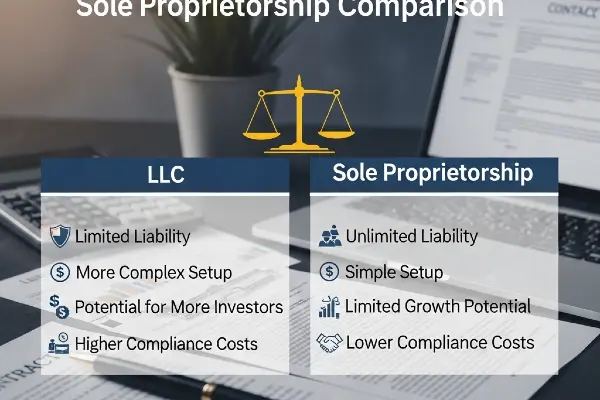
Common business structures include limited liability companies, corporations, partnerships, and sole proprietorships.
Each structure has different legal characteristics.
For example, a corporation generally exists as a separate legal entity from its shareholders. An LLC also provides a distinct legal structure, although its management and tax arrangements can differ.
Knowing the legal structure of a business can help you understand who you are dealing with and which entity should appear in a contract.
Why Business Registration Matters
Business registration provides an official record of a company’s existence within a particular jurisdiction.
This record may contain information such as the company’s legal name, registration date, business identification number, registered agent, and current filing status.
These details can help establish whether the business information presented to potential customers or partners matches official records.
Imagine that a supplier approaches your company and offers a long-term agreement.
Before transferring money or signing the contract, you may want to confirm that the supplier’s registered business name matches the name appearing on its invoices and agreement.
If the names differ, you should ask for clarification.
The company may operate under a legitimate trade name, but understanding the relationship between the trade name and legal entity is important.
How to Check Whether a Company Is Registered
Most US states maintain official business entity databases.
These databases allow users to search for companies registered within the state.
Depending on the jurisdiction, you may be able to search by company name, entity number, registered agent, or other identifying information.
For businesses operating in South Carolina, individuals can verify a company’s registration in South Carolina by understanding the state’s corporation search process and the information available through business entity records.
When reviewing a company’s registration, pay attention to its legal name, formation date, entity type, and current status.
Remember that a state registration record does not automatically prove that a company is financially stable, trustworthy, or licensed for every activity.
It is one part of a broader business verification process.
Check the Company’s Exact Legal Name
One common mistake in business agreements is using an incorrect company name.
A business may advertise itself under a short brand name while operating through a separately registered legal entity.
For example, a company might promote its services under the name “Premier Business Solutions” while its registered legal name includes additional words or an LLC designation.
The contract should correctly identify the legal party responsible for performing the agreement.
This matters because the legal identity of the contracting party can affect payment obligations, dispute resolution, and enforcement of the agreement.
If the company uses a trade name, consider asking for documentation showing which registered entity operates that name.
Understand the Difference Between Active and Inactive Companies
Business registration databases may display different entity statuses.
A company might appear as active, inactive, dissolved, suspended, or administratively dissolved.
The exact terminology and legal consequences vary by state.
An active status generally indicates that the entity remains recognized in the state’s records. However, it does not guarantee that the business has no outstanding legal or financial problems.
An inactive or dissolved status may require additional investigation.
Before entering an agreement with such a company, consider asking whether it has restored its registration or whether another legal entity is responsible for the proposed transaction.
The important point is to understand what the recorded status means under the relevant state’s rules.
Verify the Registered Agent
Many registered business entities must designate a registered agent.
A registered agent is a person or organization authorized to receive certain official legal documents on behalf of a business.
These documents may include service of process and notices from government authorities.
Checking registered-agent information can help confirm that the company’s official records are consistent with the information it provides.
However, the registered agent is not necessarily the company’s owner, manager, or authorized contract signer.
You should not assume that someone listed as a registered agent has authority to enter agreements on behalf of the company.
Check Whether the Person Signing Has Authority
Verifying the company’s registration is only one part of preparing a business agreement.
You should also determine whether the person signing the contract has authority to represent the business.
This is particularly important for large transactions, partnerships, and long-term commercial commitments.
A person may work for a company without having permission to enter binding agreements on its behalf.
Depending on the circumstances, you may request confirmation of the signer’s position or appropriate authorization.
Taking this precaution can help reduce disagreements about whether the company agreed to the contract.
Look for Additional Business Licenses
State business registration and professional licensing are not the same thing.
A company may be properly registered but still need additional licenses or permits for particular activities.
For example, certain construction, healthcare, financial, and professional services may require specific regulatory authorization.
Licensing requirements depend on the business activity and location.
Before signing a contract, check whether the company needs any special authorization to provide the services being offered.
Where applicable, verify the license through the relevant government agency rather than relying only on a certificate supplied by the business.
Review the Company’s Contract Terms Carefully
Even a properly registered company can offer an unfavorable contract.
Business owners should review the agreement itself before signing.
Pay particular attention to payment terms, delivery obligations, termination conditions, warranties, liability provisions, and dispute resolution procedures.
The contract should clearly identify the parties and explain what each side must do.
For example, if you are hiring a supplier, the agreement should explain when products must be delivered and what happens if delivery is delayed.
If you are entering a service agreement, the contract should describe the services, fees, deadlines, and circumstances under which either party may terminate the arrangement.
Clear terms can reduce uncertainty if disagreements arise later.
Why Online Reviews Are Not Enough
Online reviews can provide useful information about customer experiences.
However, reviews should not replace official business verification.
A company may have positive reviews while experiencing financial difficulties, regulatory issues, or changes in its legal status.
Likewise, a newly registered business may have few online reviews despite operating legitimately.
The better approach is to consider multiple types of information.
Review the company’s official registration, business history, relevant licenses, contract terms, and available customer feedback.
This creates a more complete picture than relying on one source alone.
Common Mistakes Businesses Should Avoid
Many business owners focus heavily on pricing and delivery schedules while overlooking basic legal verification.
One common mistake is assuming that a professional website proves a company’s legal existence.
Another is signing a contract without confirming the legal name of the business.
Some companies also fail to investigate unusual payment instructions, inconsistent addresses, or requests to transfer funds to an unrelated individual.
These issues do not automatically prove misconduct, but they can justify asking additional questions.
Business owners should also avoid assuming that registration in one state means a company has satisfied every requirement for operating in another state.
The applicable rules depend on the company’s activities and jurisdiction.
When Should You Seek Legal Advice?
Not every commercial transaction requires extensive legal review.
However, professional advice may be valuable when an agreement involves substantial financial commitments, unusual contract provisions, multiple business entities, or complex regulatory requirements.
An attorney can help identify the correct contracting party, explain important obligations, and review provisions that may create legal risks.
Business owners researching related legal matters can also use informational resources such as LawSenior to become familiar with business law topics and legal terminology before seeking advice specific to their circumstances.
Final Thoughts
Checking a company’s legal status is an important part of responsible business decision-making.
Official registration records can help you identify the correct legal entity, understand its recorded status, and compare the information presented in a proposed agreement.
However, registration alone does not establish that a company is reliable or financially secure.
A careful business verification process should also consider licensing requirements, contract terms, signing authority, and other relevant information.
Taking these precautions before signing can help reduce avoidable misunderstandings and support more informed business relationships.