South Carolina Corporation Search Find Business Records 2026
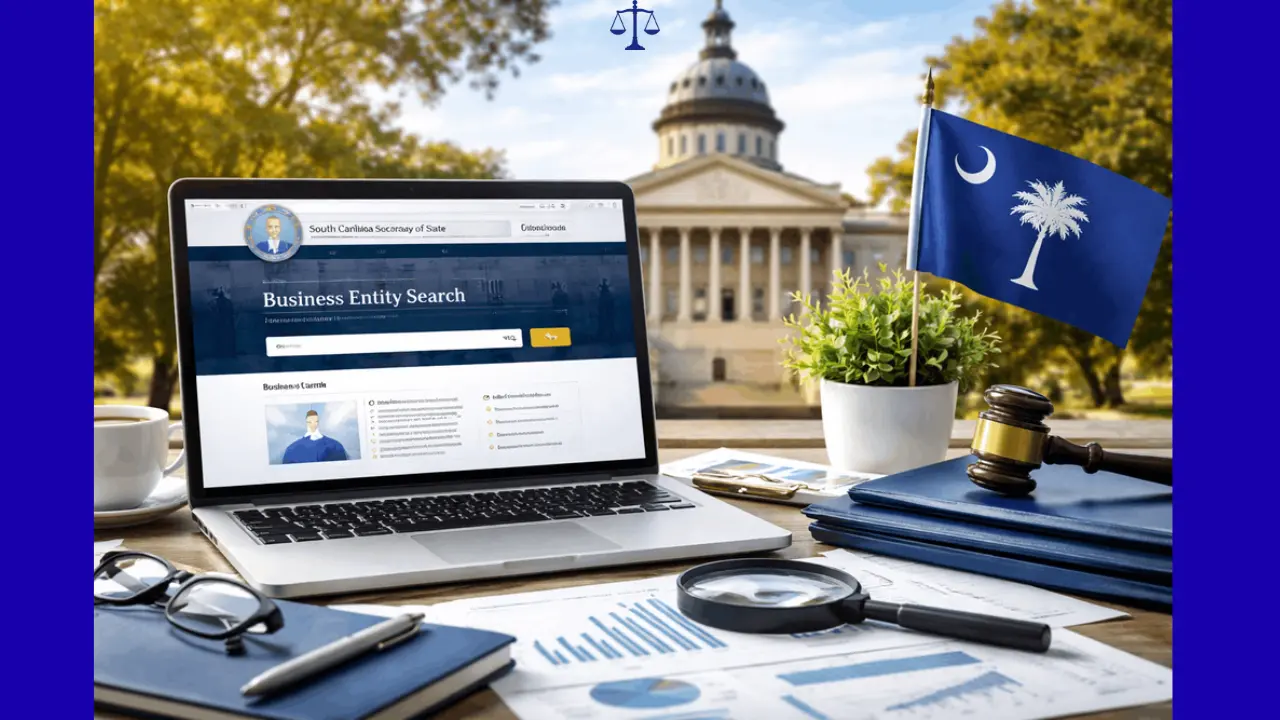
A South Carolina corporation search is the quickest way to look up a business registered with the South Carolina Secretary of State. The official business-entity database lets you identify an entity by name or identification number, review basic record details, and see whether a name appears to be in use.
The database is useful for corporations, limited liability companies (LLCs), limited partnerships, and other entities that file with the Secretary of State. It is not a complete directory of every business operating in South Carolina, since some businesses may operate under a trade name or may not be required to register as an entity with that office.
Use the official South Carolina Corporation Search entity database
South Carolina Corporation Search, Begin with the South Carolina Secretary of State’s business-entity search tool. Using the state’s own database is the best way to avoid outdated directory listings, misleading look-alike websites, and paid services that may simply repackage public information.
On the Secretary of State website, go to the business or business entities section and select the option to search business entities. The layout and labels may change over time, but the official tool generally allows a search by entity name, entity identification number, or registered agent name.
How to run a South Carolina corporation search
South Carolina Corporation Search, Search as broadly as needed at first, then use details in the results to identify the right record. A slightly different spelling, punctuation mark, or legal ending can keep an exact-name search from finding a match.
- Open the state’s business-entity search page. Confirm that you are on the South Carolina Secretary of State website before entering information.
- Choose a search method. A name search is usually best when you know only the business name. Use an entity ID when you have it; it is more precise. A registered-agent search can help when you are looking for entities associated with a particular agent.
- Enter a distinctive part of the name. Start without endings such as “Inc.,” “LLC,” “Corp.,” or “Ltd.” if an exact search produces no result. Try the principal words in the name.
- Review the results list. Compare the entity name, type, identification number, status, and other displayed details. Similar names may belong to different organizations.
- Open the entity record. Check the record details before relying on the result. The detail page may show information such as the entity’s legal name, formation or registration information, registered agent, office address, and filing history.
- Save the identifying details you need. Record the legal name and entity ID carefully if you plan to contact the business, request a document, or complete another state filing.
What information a record can tell you
South Carolina Corporation Search, A business-entity record is primarily an administrative record. It helps establish how an entity is listed with the state, but it does not by itself show that a company is reputable, financially sound, licensed for a particular occupation, or authorized to use a particular brand in every context.
| Record detail | Why it may matter |
|---|---|
| Legal entity name | Helps distinguish the registered organization from a nickname, brand, or trade name. |
| Entity type | Shows whether the record concerns a corporation, LLC, partnership, nonprofit, or another filing type. |
| Entity identification number | Provides a more reliable way to identify the entity than its name alone. |
| Status | Offers an administrative status shown by the state; read it with the rest of the record. |
| Registered agent | Identifies the person or business designated to receive certain official communications for the entity. |
| Addresses and filing information | Can help confirm that you have found the intended entity and reveal listed filings or changes. |
Search by name without missing likely matches
South Carolina Corporation Search, Name searching can be less straightforward than it seems. Legal names often include words or endings that a customer never sees, and separate companies can have closely similar names.
Use these approaches when the first search does not find the record:
- Try the main word or two from the business name rather than the full name.
- Test common spelling variations, singular and plural forms, or alternate spacing.
- Leave out punctuation and entity endings such as LLC or Inc.
- Search the exact legal name if it appears on a contract, invoice, state notice, or filing.
- Use the entity ID from a state document whenever possible.
Checking a business name before forming an entity
South Carolina Corporation Search is a sensible first screen for a proposed name, but it is not the same as formal name approval or reservation. A search result can show that a similar name exists, while no result does not guarantee that the name will be accepted for a new filing.
Names are subject to state naming rules, and an entity name may need to be distinguishable from names already on record. Other issues can also matter, including trademarks, assumed names, domain names, and names used outside the Secretary of State’s entity database. Before printing materials or committing to a name, follow the current name-checking and filing instructions from the Secretary of State.
Understanding status, good standing, and active operations
South Carolina Corporation Search: Do not treat an entity status as a full picture of a company. The status displayed in a search record relates to the state’s administrative records. Its precise meaning depends on the entity type, its filings, and the current record.
Three ideas are often confused:
- Entity status: The status shown in the Secretary of State database for that record.
- Good standing: A formal standing concept that may require confirmation through the appropriate state process or an official certificate when one is needed.
- Operating business: Whether the company is actually trading, serving customers, or accepting work. A database entry alone cannot prove this.
Corporation, LLC, and trade name: important differences
“Corporation” is commonly used to mean any company, but it has a narrower legal meaning. A corporation is one entity type. An LLC is a different entity type, and both may appear in the same South Carolina Corporation Search database.
A trade name, brand, or doing business as name can be different from the legal entity name. A restaurant sign, website, or social-media profile may use a brand name while contracts and state records use the company’s full legal name. When verifying a business, ask for or locate the exact legal entity name instead of relying only on the brand.
Common search problems and practical fixes
No result appears
South Carolina Corporation Search: Try fewer words, alternate spellings, or a different search method. The business may be registered under a different legal name, may have changed its name, or may not be an entity filed with the Secretary of State.
Several nearly identical results appear
Compare entity IDs, addresses, entity types, and formation details. Do not assume that the first result is the intended organization. Similar names can belong to unrelated businesses.
The search result does not prove a license
South Carolina Corporation Search, Secretary of State registration, and professional or occupational licensing are separate matters. For work that requires a state or local license, check with the regulator or local authority responsible for that activity.
The record looks out of date
Public filings reflect information submitted to the state and may not capture every recent operational change immediately. Use the record as a starting point, then verify critical details through official channels or with the entity itself.
Protect your information when searching
Most South Carolina Corporation Searches require only public business information. Be cautious if a website asks for unnecessary payment details, personal identification information, or login credentials just to view a basic entity record. Check the website address and move through the South Carolina Secretary of State Corporation Search site rather than relying on an advertisement or an unfamiliar link.
Frequently asked questions
Is the South Carolina corporation search free?
South Carolina Corporation Search: Basic public entity searching is generally offered through the Secretary of State’s online business-entity tools. Fees, if any, can apply to filings, certificates, copies, or other services, so check the official site for the current terms before ordering anything.
Can I search for an LLC as well as a South Carolina Corporation?
Yes. The business-entity database covers more than corporations. Review the entity type in each result to confirm whether it is an LLC, corporation, partnership, nonprofit, or another type of filing.
Does a name search reserve the name for me?
No. Searching a name only helps identify possible conflicts or similar records. It does not reserve the name or guarantee approval for a future filing.
Can I find a business owner through the South Carolina Corporation Search database?
Not necessarily. A record may list a registered agent and other filing details, but that does not always identify every owner, shareholder, member, director, or manager. Available fields depend on the entity and its filings.
What should I do if the business is not listed?
Try name variations and look for the legal name on the business’s documents. If it still does not appear, the business may use a different entity name, be formed elsewhere, operate as an unregistered sole proprietorship, or simply not be in the database you are checking.
Use the record as a starting point
A South Carolina corporation search is most effective when you search broadly, confirm the exact legal entity through its ID and record details, and recognize the limits of public filing information. For a simple name check or identity verification, the official state database is often the right first stop. For a formal certificate, licensing question, or high-stakes decision, confirm the specific requirement with the relevant official agency.