Will vs Trust: Which One Do You Need in the United States?
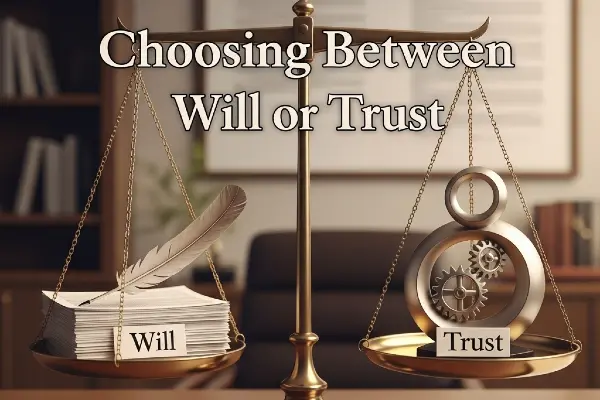
When it comes to estate planning, two of the most common tools are a will and a trust. People often think they’re the same thing, but they work very differently.
Choosing between them depends on how you want your assets handled, how much control you want, and how much complexity you’re willing to manage.
What Is a Will?
A will is a legal document that explains what happens to your assets after you die.
It typically covers:
- Who inherits your property
- Who will take care of minor children
- Who will manage your estate
A will only takes effect after death and usually goes through probate court.
What Is a Trust?
A trust is a legal arrangement where assets are placed under the control of a trustee for the benefit of others.
It involves:
- A person who creates the trust (grantor)
- A trustee who manages it
- Beneficiaries who receive the assets
A trust can take effect during your lifetime and continue after death.
Key Difference: Probate
This is one of the biggest differences between the two.
Will
- Usually goes through probate
- Court supervises asset distribution
- Can take months or longer
Trust
- Often avoids probate
- Assets transfer privately
- Typically faster and smoother
Control Over Assets
Will
A will only controls what happens after you pass away. You maintain full control of your assets while alive.
Trust
A trust can manage assets while you are alive and after death. This allows for more flexibility and control over how and when assets are distributed.
Privacy Difference
Will
- Becomes a public record during probate
- Anyone can potentially access details
Trust
- Remains private
- Details are not part of public court records
If privacy matters to you, this is a major factor.
Cost and Complexity
Will
- Simple to create
- Lower upfront cost
- Easier to update
Trust
- More complex to set up
- Higher initial cost
- Requires ongoing management
Trusts take more effort but offer more long-term benefits.
When Should You Choose a Will?
A will may be enough if:
- You have a simple estate
- You want something quick and affordable
- You don’t mind probate
- You mainly want to name guardians for children
It’s a basic but effective estate planning tool.
When Should You Choose a Trust?
A trust is often better if:
- You want to avoid probate
- You have significant assets
- You want more control over distributions
- You value privacy
- You own property in multiple states
It’s commonly used for more structured estate planning.
Can You Have Both?
Yes. Many people use both a will and a trust together.
A common setup is:
- Trust handles most assets
- Will covers anything left out (called a “pour-over will”)
This combination helps ensure nothing is missed.
Common Mistakes to Avoid
- Thinking a will avoids probate (it usually doesn’t)
- Creating a trust but not funding it properly
- Not updating documents after major life changes
- Ignoring beneficiary designations on accounts
- Assuming estate planning is only for the wealthy
Small planning mistakes can create big problems later.
Final Thoughts
Both wills and trusts play important roles in estate planning in the United States. A will is simple and straightforward, while a trust offers more control and privacy.
The right choice depends on your situation, but understanding the difference is the first step toward making a smart decision for the future.