
Ohio Window Tint Law Limits Enforcement and Exemptions 2026
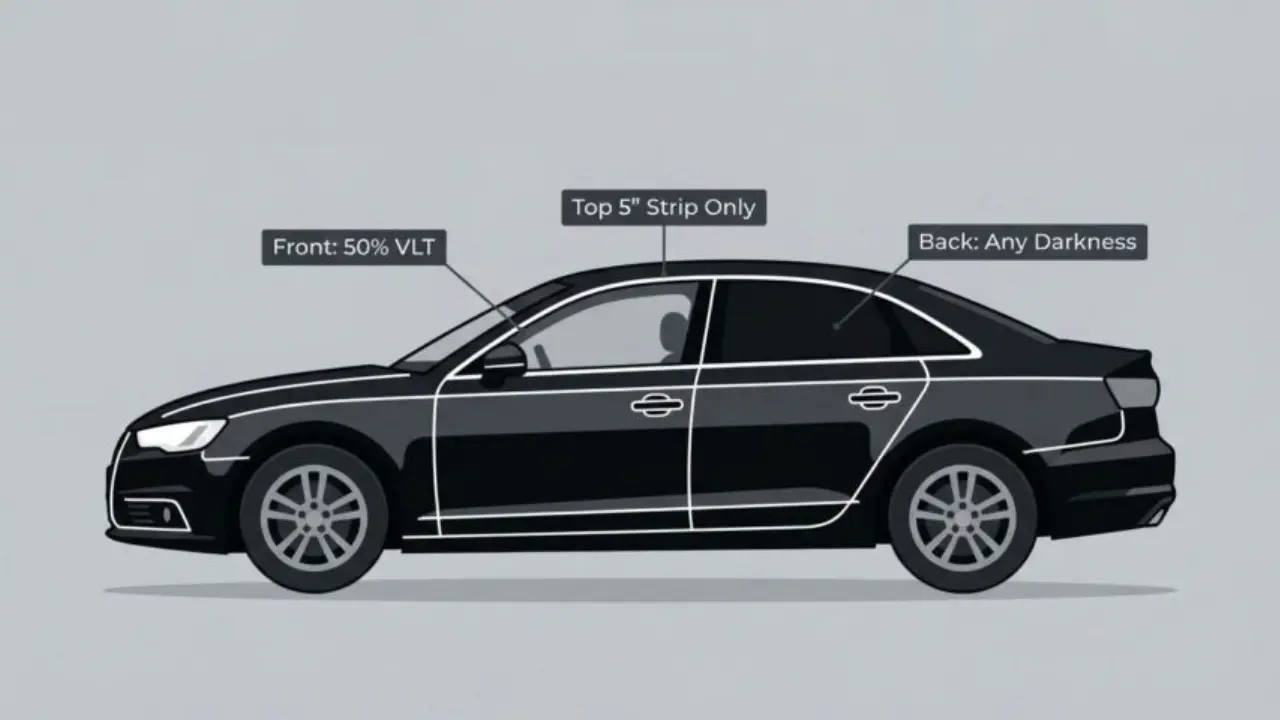
The Ohio window tint law is primarily a vehicle-equipment and traffic-safety issue, not a known class action, consumer settlement, or lawsuit involving window-tint buyers. Ohio regulates how much light must pass through certain vehicle windows and restricts material that obstructs a driver’s view. A vehicle can have factory glass or aftermarket film, but it must meet the applicable light-transmission rules unless a recognized exception applies.
What is the Ohio window tint law?
Ohio Window Tint Law prohibits operating a motor vehicle with window tint or other nontransparent material that does not comply with state light-transmission standards. In general, the windshield must allow at least 70% of outside light through it, while the windows immediately to the driver’s right and left must allow at least 50% through them.
The key Ohio provisions include Ohio Revised Code Section 4513.241 and Ohio Administrative Code Rule 4501-41-03. The statute establishes the prohibition and exceptions, while the administrative rule sets technical standards for safety glazing and light transmission.
Light transmittance means the percentage of visible light that passes through the window and any film. A higher percentage means a lighter window. For example, 70% visible light transmission, often called 70% VLT, allows more light through than 50% VLT.
Ohio Window Tint Law limits at a glance
Ohio Window Tint Law, The following table summarizes the commonly applicable minimum visible-light-transmission standards in Ohio. These are minimums: tint that allows less light through than the listed percentage may violate the rule.
| Vehicle area | Minimum light transmittance | Practical meaning |
|---|---|---|
| Windshield | 70% | The windshield generally must remain very light and clear enough for at least 70% of outside light to pass through. |
| Windows immediately to the right and left of the driver | 50% | The front side windows must allow at least half of outside light to pass through. |
| Other side and rear windows | 50% | Ohio’s rule generally requires at least 50% light transmission for the remaining windows as well. |
How Ohio measures window tint
Ohio Window Tint Law standards focus on visible light transmission. In an enforcement setting, an officer may use a tint meter or rely on other observations and evidence, depending on the circumstances. The ultimate legal question is whether the vehicle’s windows meet the applicable state requirement, not whether a driver believed the film was lawful when it was installed.
Windshield obstructions
Ohio’s restrictions are not limited to dark film. Signs, posters, decals, and other materials that obstruct a driver’s clear view through the windshield or windows can raise a separate issue. A driver should consider both the tint’s measured light transmission and whether any item blocks required visibility.
SUVs vans or trucks
Ohio Window Tint Law, Drivers should not assume that owning an SUV, pickup, van, or other multipurpose passenger vehicle allows darker rear-window tint in Ohio. The state rule contains vehicle classifications and technical language, but it generally sets the same 50% minimum light-transmission standard for windows other than the windshield. Vehicle design, factory glazing, commercial use, and specialized vehicles can create questions that are not answered by a generic tint chart.
Medical exemption
Ohio law provides a limited medical-related exception for a person with a medical condition that makes the person sensitive to light. The exception is not a blanket permission to use any darkness of tint, and a driver should not rely on an informal note or verbal recommendation alone.
The statutory framework addresses documentation from a licensed physician or optometrist and requires compliance with the applicable process. Because documentation requirements and agency procedures can change, drivers considering an exception should verify the current requirements with the Ohio Bureau of Motor Vehicles and the governing statute before installing film or operating the vehicle.
Vehicle violates Ohio tint rules
Operating a vehicle in violation of Ohio Revised Code Section 4513.241 can result in a traffic citation. The statute classifies a violation as a minor misdOhio Window Tint Law, emeanor. The result in an individual matter can depend on the specific facts, local court process, prior corrections, and other circumstances.
A tint citation is not the same as a finding that a tint manufacturer or installer committed consumer fraud. It generally concerns whether a vehicle’s equipment complied with Ohio requirements at the time it was operated. A driver may decide to remove or replace tint, contest a citation, or seek legal advice about the particular facts. This article does not determine whether any individual citation is valid.
Class action
No verified class action is inherent in the Ohio window tint law. The phrase usually refers to Ohio’s traffic and vehicle-equipment rules, not to a lawsuit against a particular tint company, dealer, installer, or government agency.
A class action requires an actual court case in which a plaintiff seeks to represent a group and, ordinarily, a court decision certifying a class. A traffic citation issued to one driver, a disagreement with an installer, or multiple online complaints about dark tint does not by itself create a class action.
Settlement
There is no verified statewide settlement associated simply with the term “ohio window tint law.” State equipment rules do not create automatic payments, a settlement fund, or a claim deadline for drivers with tinted windows.
Online ads or posts that use terms such as “settlement,” “claim,” or “compensation” should be checked carefully. A legitimate class-action settlement normally identifies the court, case name, settlement administrator, eligibility requirements, deadlines, and official court-approved notice. Do not provide personal information or pay a fee based only on an advertisement claiming that a tint-related settlement exists.
What consumers should ask before tint is installed
Consumers can reduce compliance problems by asking clear questions before work begins. An installer may be able to explain the film’s stated VLT, but the consumer should also ask about the expected combined VLT after the film is placed on the vehicle’s existing glass.
- Ask whether the proposed finished installation is intended to meet Ohio’s 70% windshield and 50% window standards.
- Request a written estimate identifying the film and the windows to be tinted.
- Keep the invoice, warranty, packaging information, and any written compliance statement.
- Ask whether the installer measured the glass before and after installation and request the result if available.
- Be cautious about claims that a very dark tint is “legal everywhere” or that a medical note automatically makes any tint lawful.
How to verify the current Ohio rule
Traffic and vehicle-equipment regulations can be amended. The most reliable starting points are the current version of Ohio Revised Code Section 4513.2Ohio Window Tint Law, 41 and Ohio Administrative Code Rule 4501-41-03. Drivers may also consult the Ohio Bureau of Motor Vehicles for administrative questions.
If a driver has received a citation, the ticket and local court information will identify the alleged violation and response date. Missing a court date or deadline can have consequences independent of the tint issue. A local traffic lawyer can provide advice tailored to the citation and the driver’s circumstances.
Current status of the Ohio window tint law
The Ohio window tint law is an ongoing state vehicle-equipment requirement, not a single pending lawsuit. The relevant compliance standards generally require 70% light transmission for the windshield and 50% for the side and other windows, subject to statutory exceptions and the detailed wording of the governing rules.
There is no verified class-action settlement or broad consumer payout merely because a vehicle has tint that may not meet Ohio standards. Individual disputes involving a citation, vehicle sale, or tint installation should be evaluated on their own facts and current official legal materials.
Frequently asked questions
What tint percentage is legal in Ohio Window Tint Law?
Ohio Window Tint Law generally requires at least 70% light transmission through the windshield and at least 50% through the windows immediately beside the driver and other windows. The relevant measure is the total light transmission through the glass and any applied film.
Is 35% tint legal in Ohio?
Generally, no. A finished window with 35% visible light transmission permits less light than Ohio’s general 50% minimum for side and rear windows. The precise facts and any valid exception still matter.
Can I use a doctor’s note for darker window tint in Ohio?
Ohio has a medical-related exception for qualifying light sensitivity, but it has documentation and legal requirements. A driver should verify the current statutory and BMV process rather than relying on an informal note.
Does factory tint count under Ohio law?
Yes, the finished glass is what matters. Factory tint does not automatically mean a window complies, especially if aftermarket film is later added.
Is there a settlement for illegal window tint in Ohio?
No verified statewide settlement follows from Ohio’s tint law itself. A specific lawsuit or settlement should be verified through official court-approved materials before anyone submits a claim or personal information.
Conclusion
The Ohio window tint law regulates vehicle visibility and equipment rather than creating a lawsuit or automatic consumer claim. Drivers should focus on the applicable 70% windshield and 50% window light-transmission standards, confirm whether any exception applies, and keep records of tint work. A citation or a dispute with an installer may raise separate legal questions, but neither establishes wrongdoing nor proves that a class action or settlement exists.