How Probate Works in the United States in 2026?
When someone passes away, their assets don’t automatically transfer to others. In many cases, the estate goes through a legal process called probate.
Probate can sound complicated, but it follows a structured path. Once you understand the steps, it becomes much easier to navigate.
What Is Probate?
Probate is the legal process of settling a person’s estate after they die.
It involves:
- Validating a will (if one exists)
- Identifying assets
- Paying debts and taxes
- Distributing what’s left to beneficiaries
If there’s no will, the court follows state laws to decide who receives the assets.
When Is Probate Required?
Probate is usually required when:
- The deceased owned assets in their name alone
- There is no designated beneficiary
- The estate exceeds a certain value (varies by state)
Some assets may avoid probate, such as:
- Jointly owned property
- Accounts with named beneficiaries
- Trust-held assets
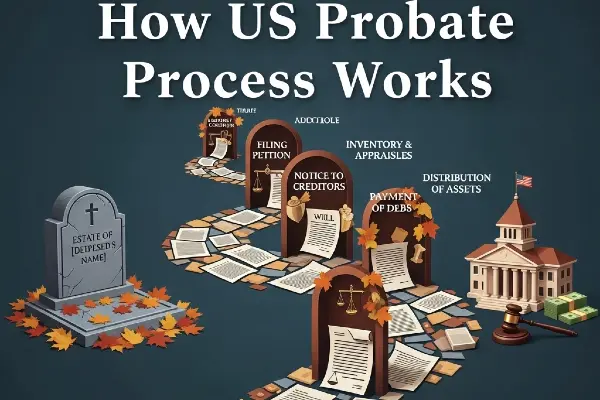
Step 1: File with the Probate Court
The process starts by filing a petition with the local probate court.
This includes:
- The death certificate
- The will (if available)
- A request to open the estate
Once accepted, the court officially opens the probate case.
Step 2: Appoint an Executor or Administrator
The court appoints someone to manage the estate.
- If there’s a will, this person is usually named as the executor
- If there’s no will, the court appoints an administrator
This person is responsible for handling the entire process.
Step 3: Notify Heirs and Creditors
The executor must notify:
- Beneficiaries named in the will
- Legal heirs
- Creditors who may be owed money
This gives everyone a chance to come forward with claims.
Step 4: Take Inventory of Assets
All assets must be identified and valued.
This may include:
- Bank accounts
- Real estate
- Vehicles
- Investments
- Personal property
Accurate records are important for the next steps.
Step 5: Pay Debts and Taxes
Before distributing anything, the estate must settle obligations.
This includes:
- Outstanding debts
- Final bills
- Taxes (if applicable)
If the estate doesn’t have enough funds, debts are paid in a specific legal order.
Step 6: Distribute Remaining Assets
After debts are cleared, the remaining assets are distributed.
- If there’s a will, assets go to named beneficiaries
- If there’s no will, state law determines who receives what
The executor ensures everything is handled according to the law.
Step 7: Close the Estate
Once all tasks are complete, the executor files final paperwork with the court.
After approval:
- The estate is officially closed
- The executor’s duties end
At this point, the probate process is complete.
How Long Does Probate Take?
Probate timelines vary depending on:
- The size of the estate
- Whether there are disputes
- State requirements
Simple cases may take a few months, while complex estates can take a year or more.
Can Probate Be Avoided?
In some cases, yes.
Common ways to avoid probate include:
- Creating a living trust
- Naming beneficiaries on accounts
- Holding property jointly
Planning ahead can reduce or eliminate the need for probate.
Common Mistakes to Avoid
- Delaying the filing process
- Failing to notify creditors properly
- Mismanaging estate assets
- Distributing assets before debts are paid
- Not keeping clear records
These issues can lead to delays or legal complications.
Final Thoughts
Probate in the United States follows a clear step-by-step process, even though details vary by state. While it can take time, understanding each stage helps you stay organized and avoid unnecessary stress.
With the right approach, the process becomes manageable and much easier to handle.